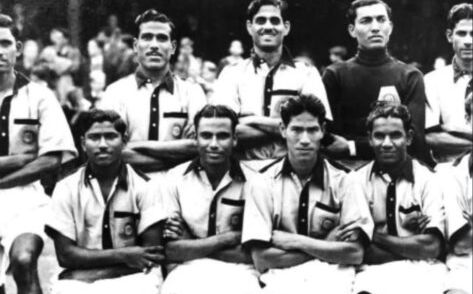











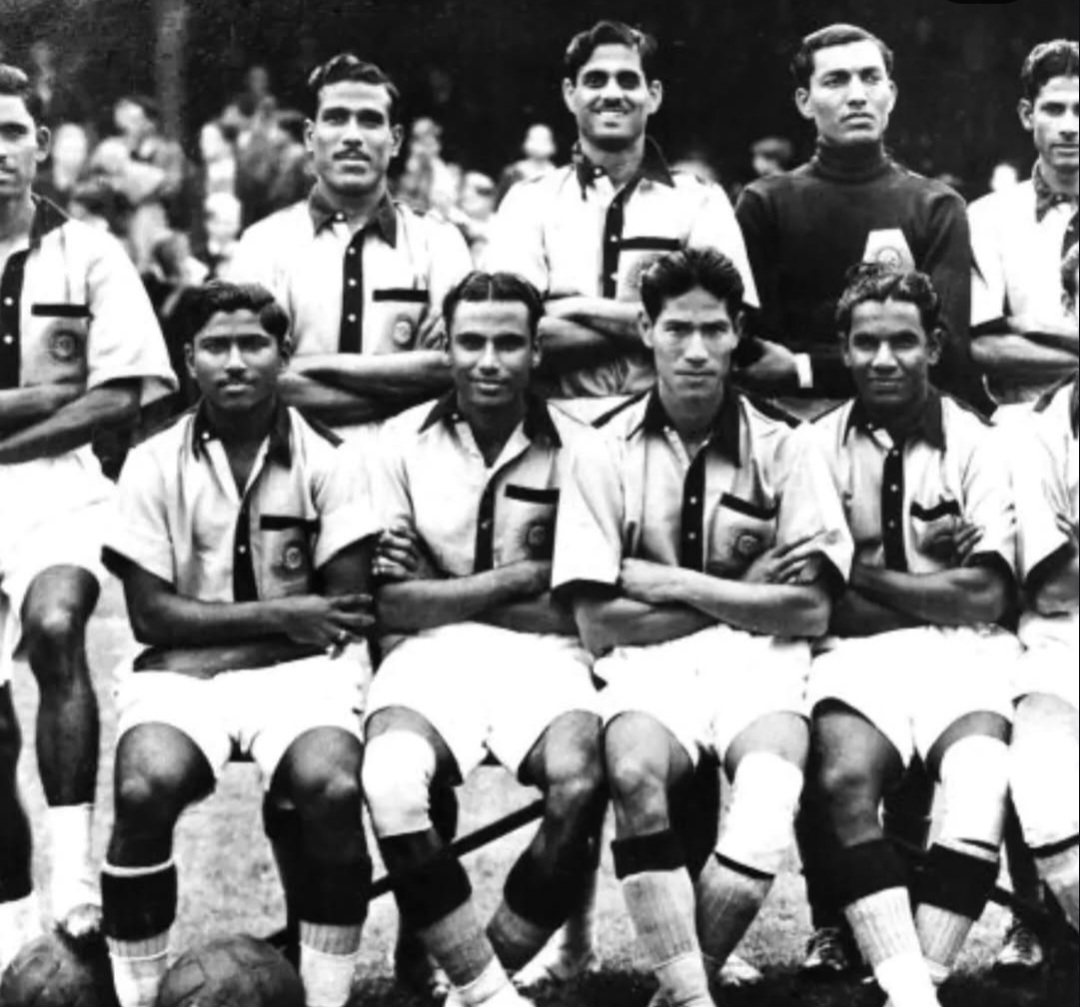
Every four years, when the FIFA World Cup captures global attention, millions of Indians become temporary football fans. Cafés fill with supporters of Argentina, Brazil, Germany, England, or France. Social media timelines overflow with tactical debates and Messi-versus-Ronaldo arguments.
Then comes the uncomfortable question: Why is India, a nation of 1.4 billion people, not part of the conversation?
The standard answer is simple: we don’t have quality players.
Compare this to cricket or badminton we are having some of the best athletes in those sports and than why no one in football.
India’s football problem is the same what Indian people face in India. Common man has no say in who and how he is governed.
The story of Indian football is not merely a sporting failure. It is a story about governance, bureaucracy, social hierarchy, political priorities, and a state that repeatedly struggles to convert potential into performance.
The national football team is not an exception to India’s systemic challenges. It is one of their clearest manifestations.
A Giant That Plays Like a Dwarf
India has one of the world’s largest youth populations. Every year, millions of children play football in schools, streets, villages, military grounds, and urban neighborhoods.
Yet the country remains an afterthought in world football.
The contrast is astonishing.
Tiny nations with populations smaller than Indian cities routinely outperform India. Iceland, Uruguay, Croatia, and Senegal have all produced football achievements that India can only dream about.
The problem is not genetics.
The problem is not passion.
The problem is not even money.
The problem is that India has never built a serious footballing system. And Indian politicians like money so they like cricket. Where there is quick money and influence. While football will be a long term goal nobody has one these days at higher echelons of indian society.
Instead, it has built layers of committees, associations, regulations, and power centers that often seem more interested in managing football than developing it.
The Bureaucrats Always Win
One of the most enduring truths about Indian public life is that institutions often exist to preserve themselves.
Football administration reflects this culture perfectly.
For decades, Indian football has suffered from leadership crises, governance disputes, political interference, legal battles, and administrative confusion. While elite football nations obsess over coaching methods, player development, and tactical innovation, Indian football has frequently been distracted by boardroom conflicts.
The consequences are visible everywhere.
Poor scouting networks.
Weak grassroots structures.
Inconsistent youth pathways.
Limited coaching quality.
Fragmented planning.
The average Indian football fan may not know the names of administrators. Yet their decisions shape the future of every aspiring footballer.
In India, talent frequently has to overcome the system rather than benefit from it.
Caste Never Truly Leaves the Field
Sport is often celebrated as the great equalizer.
Reality is more complicated.
Indian football does not exist outside Indian society. It exists within it.
Access to quality coaching, nutrition, travel, equipment, and exposure is heavily influenced by social and economic circumstances. The child who plays barefoot in a village and the child enrolled in an elite urban academy are not competing from the same starting line.
Caste may not determine who scores goals on a football pitch, but it continues to influence access to opportunity through its relationship with wealth, education, networks, and geography.
The result is a silent filtering process.
Not all talent gets discovered.
Not all talent gets developed.
Not all talent gets a second chance.
The footballers who never emerge may be more significant than those who do.
Political Leaders Love Victories They Didn’t Build
Politicians love successful athletes.
They love photographs with champions.
They love victory parades.
They love announcing rewards after medals are won.
What they often do not love is the slow, unglamorous work required to produce those champions.
Football development is not politically attractive.
Building academies takes years.
Training coaches takes years.
Creating youth leagues takes years.
Improving sports education takes years.
The political reward, however, may arrive decades later—long after the ribbon-cutting ceremony.
As a result, football frequently becomes a victim of electoral short-termism.
Governments prefer visible projects over institutional reform.
Stadiums are easier to inaugurate than systems.
Concrete is easier to photograph than competence.
The Tyranny of Examinations
Perhaps no institution has damaged Indian sport more consistently than the country’s obsession with examinations.
From an early age, millions of children receive a clear message:
Sport is acceptable as a hobby.
Education is non-negotiable.
For most middle-class families, this calculation is understandable. Sporting careers are uncertain. Economic security matters.
But the collective result is devastating.
Potential athletes abandon competition during crucial developmental years.
Schools treat sport as extracurricular rather than essential.
Universities rarely function as talent incubators.
Football becomes something children do until adulthood arrives.
The nation loses thousands of potential professionals without ever noticing.
The Indian Super League and the Illusion of Progress
The Indian Super League has undoubtedly transformed football’s visibility.
Television audiences have grown.
Foreign players have arrived.
Professional standards have improved.
Corporate investment has increased.
Yet visibility is not the same as development.
A modern league can create excitement, but it cannot compensate for weak foundations.
Without robust grassroots structures, youth academies, community clubs, and coaching networks, professional football risks becoming a glossy surface covering a fragile ecosystem.
A football pyramid cannot stand indefinitely on its top tier alone.
Why Football Mirrors the Republic
The deeper one examines Indian football, the more it resembles Indian governance.
Both are rich in potential.
Both suffer from institutional weaknesses.
Both struggle with implementation.
Both are burdened by bureaucracy.
Both often reward connections over competence.
Both frequently prioritize symbolism over substance.
The football pitch becomes a miniature version of the republic itself.
Every failed academy reflects a policy failure.
Every lost talent reflects a developmental failure.
Every administrative controversy reflects a governance failure.
The national team’s ranking is not simply a sporting statistic.
It is, in many ways, a measure of how effectively India transforms human potential into collective achievement.
The Hard Truth
Football is brutally democratic.
The sport does not care about population size.
It does not care about GDP.
It does not care about military power.
It does not care about historical prestige.
It rewards only what is built consistently over time.
The world has spent decades asking why India has not become a football power.
The better question is this:
Why should India become a football power when so many of the institutions required for success remain weak, fragmented, or neglected?
The tragedy of Indian football is not that talent is absent.
The tragedy is that talent is abundant.
And abundance without organization is merely wasted potential.
Until India learns to build institutions with the same enthusiasm that it celebrates individuals, football will remain what it has been for generations: a nation-sized possibility trapped inside a system that cannot fully realize it.
Indian football’s greatest opponent is not Qatar, Japan, South Korea, or Australia.
It is the culture of governance that surrounds it.
This version reads more like an opinion piece from The Indian Express, The Wire, Scroll, or The Economist—more argumentative, sharper in tone, and structured around a central thesis linking football to the political economy of India.