






- Politics
Why India Needs Prime Ministerial Libraries— who all will qualify?
Why India Needs Prime Ministerial Libraries— who all will qualify?
The photograph above shows the Obama Presidential Center, part of America’s unique tradition of presidential libraries. These institutions are more than monuments of concrete and steel. At their best, they preserve records, ideas, debates, and the intellectual legacy of leaders who shaped their nations. India, too, should consider creating a similar tradition—but only for a handful of prime ministers whose contributions fundamentally altered the course of the Republic.
India is not short of political memorials. Across the country, roads, parks, airports, and museums bear the names of leaders. Yet very few places seriously preserve the papers, speeches, correspondence, policy documents, and personal reflections that future generations need to understand governance. A Prime Ministerial Library should not be a shrine. It should be a centre for research, public education, archives, and debate.
However, not every prime minister deserves such an institution. Longevity in office alone is not enough. The standard should be historical significance, integrity, and lasting contribution to nation-building.
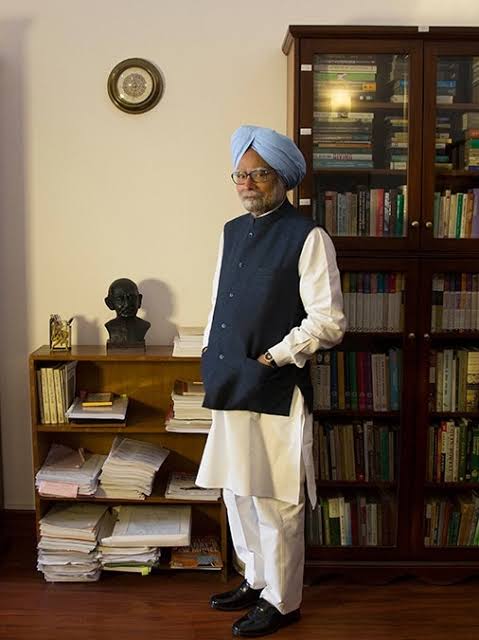
Manmohan Singh: The Scholar-Statesman
Among post-independence leaders, Manmohan Singh stands out as an obvious candidate.
As Finance Minister in 1991, he helped steer India away from economic crisis and initiated reforms that transformed the country from a largely closed economy into one integrated with global markets. As Prime Minister, he presided over a period of sustained economic growth, expansion of higher education, and landmark legislation such as the Right to Information Act.
A library dedicated to him would not merely celebrate a political career. It would document one of the most consequential economic transformations in modern Indian history. Researchers, economists, students, and policymakers would benefit enormously from access to archives explaining how decisions were made during a critical period of India’s development.
Chaudhary Charan Singh: Voice of Rural India
Another deserving figure is Chaudhary Charan Singh.
Although his tenure as Prime Minister was brief, his influence on Indian agriculture and rural policy was profound. Few leaders articulated the interests of farmers as consistently or as thoughtfully. His writings on agrarian economics remain relevant today, particularly as India continues to grapple with questions of rural prosperity, land ownership, and agricultural reform.
A Charan Singh Library could become India’s premier centre for the study of rural development, agriculture, and cooperative economics. Such an institution would honour not merely a politician but a set of ideas that continue to shape the lives of hundreds of millions of Indians.
A Different Model for India
India should avoid the American tendency to build ever-larger monuments. Instead, these libraries should be integrated into universities and public institutions.
A Manmohan Singh Centre could be associated with economics and public policy. A Charan Singh Centre could focus on agriculture and rural transformation. Their purpose would be intellectual rather than commemorative.
The goal should not be to glorify leaders but to preserve the history of decision-making. Democracies become stronger when citizens can examine how major policies were conceived, debated, and implemented.
Building Institutions, Not Statues
India has spent decades constructing statues and memorials. The next stage of national remembrance should be the creation of institutions that generate knowledge.
A carefully curated network of Prime Ministerial Libraries would allow future generations to engage with the ideas that shaped India. If such institutions are to be established, they should be reserved for leaders whose contributions transcended politics and left a lasting mark on the nation’s trajectory.
By that standard, Manmohan Singh and Chaudhary Charan Singh stand among the strongest candidates—not because they occupied high office, but because the ideas they championed continue to influence India’s future long after their time in power.
-
Fieldman
- June 26, 2026
- 0 Comments
- 6 Views
-