











1902–1987
The Intellectual Prime Minister
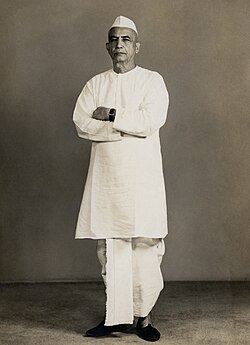
On 29 May 1987, India lost one of its last great agrarian statesmen: Chaudhary Charan Singh, a man who carried the scent of the soil into the marble corridors of Delhi. In an age increasingly dominated by industrial ambition and urban political arithmetic, Charan Singh remained stubbornly, almost defiantly, the voice of the Indian farmer.
Born in 1902 in Noorpur village in present-day Uttar Pradesh, Charan Singh emerged from a peasant background that would shape both his politics and his worldview. Trained in law, he entered public life during the freedom struggle, but unlike many of his contemporaries, he never cultivated the aura of a nationalist romantic. His politics was practical, unsentimental and rooted in land, debt, crop prices and dignity.
If Jawaharlal Nehru dreamt of steel plants and scientific temper, Charan Singh worried about indebted cultivators and fragmented holdings. To him, India did not live in factories or planning commissions; it lived in villages. This conviction often placed him at odds with the Congress establishment, whose economic imagination leaned toward centralised industrialisation.
As Chief Minister of Uttar Pradesh, and later as India’s Home Minister and Prime Minister, Charan Singh built his reputation on administrative rigour and incorruptibility. He was austere to the point of severity. Associates recalled that he disliked extravagance, distrusted political sycophancy and maintained the habits of a disciplined provincial lawyer even after ascending to national office.
Yet his greatest political contribution was not administrative but sociological. Long before caste politics became the defining grammar of north India, Charan Singh understood the latent political power of the middle peasantry—particularly Jats and other backward agrarian communities. He forged a coalition that challenged the dominance of upper-caste Congress elites and altered the political trajectory of the Hindi heartland for decades to come.
His brief tenure as Prime Minister in 1979 was tragically symbolic. Elevated amid the collapse of the Janata experiment, he never faced Parliament before losing support. His government lasted mere weeks. To critics, it was evidence of political overreach; to admirers, proof that principled politicians often make poor conspirators.
But history has been kinder to Charan Singh than politics was. Today, as debates rage over agricultural reform, rural distress and the widening divide between urban and rural India, his warnings sound remarkably contemporary. He believed that neglecting the farmer would imperil both democracy and social stability. India, he argued repeatedly, could not modernise by humiliating its villages.
He was not a visionary in the grand Nehruvian mould, nor a mass communicator like Indira Gandhi. He lacked ideological glamour. But he possessed something rarer: intellectual consistency. Through decades of political upheaval, Charan Singh remained faithful to one constituency—the rural cultivator.
His legacy survives not merely in institutions named after him, such as Chaudhary Charan Singh International Airport, but in the enduring political centrality of India’s farmers.
In death, as in life, Charan Singh stands as a reminder that India’s republic was built not only by its celebrated modernisers, but also by those who insisted that the plough mattered as much as the factory chimney.


1 Comment
A WordPress Commenter
May 12, 2026Hi, this is a comment.
To get started with moderating, editing, and deleting comments, please visit the Comments screen in the dashboard.
Commenter avatars come from Gravatar.